

Posts Tagged ‘sugar’

19 Different Sugars but Which Are Healthy

I love sweets 19 Different Sugars but Which Are Healthy
Will the REAL FOOD Sugar Please Stand Up?

I love sweet things. As a child I was addicted to white sugar and this caused many health problems. This is one reason  I am always talking about real foods: foods that are whole, live and are balancing to the body. I try to find sugars in this category.

In past articles I dealt with 7 Tips to Stop White Sugar Cravings and Reasons to Avoid Artificial Sweeteners. Now we deal with the more natural ones.

Not all sugars are equal. Some are very good for you in small quantities. Many are less healthy. Which ones on the following list would you consider real foods? Which do you use and why? Read the rest of this entry »

retweet 19 Different Sugars but Which Are Healthy

7 Tips to Reduce Sugar Cravings

7 Tips to Reduce Sugar Cravings As a child I was practically raised on white sugar and feel that it had a part in my many health problems which took me decades to overcome. I’m going to give you strategies to avoid sugar and the cravings, but first I must make a few points about why you would want to do such a thing. Read the rest of this entry »

Will the REAL Food Sugar Please Stand Up?

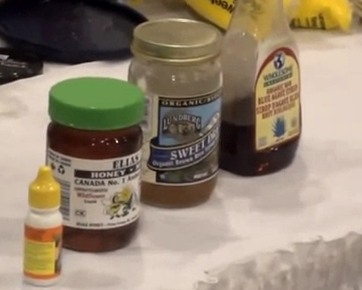
There are lots of different sugars.

Can you pick out which ones are good?

sugar Will the REAL Food Sugar Please Stand Up?


At Real Food for Life we are always looking for real foods: foods that are whole, live and are balancing to the body. Last post (Are you Dying to be Thin?) we talked about the chemical sweeteners and their problems.  Now we deal with the more natural ones.

The problem with consuming any simple carbohydrate is that it creates an insulin rush that overworks the pancreas. Over time, the body’s ability to handle all sugars, simple and complex, begins to weaken.

Most sugars are strongly acid forming in the body.

Not all sugars are completely equal though but they do all have calories! Which ones on this list would you consider real food and why?

Common Sugars and Sweeteners

  • White sugar (aka sucrose) is a pure chemical extract of sugar cane or sugar beet with no vitamins or minerals; these are stripped during the extraction process. Refined white sugar is a simple carbohydrate with lots of calories, no dietary fibres and is an isolate and isolates never occur in whole foods. Vegetarians may note that it may be processed with bone char. Causes a `sugar high`.
  • Brown sugar is white sugar coated in molasses which will add a few trace minerals but no healthier than white sugar and creates the same `sugar high` as white sugar.
  • Fructose is not from fruit; it is a commercial, refined sugar and it is no more nutritious than sucrose. It raises cholesterol, makes blood cells more prone to clotting, and it may also accelerate the aging process.
  • Sugar alcohols (Erythritol, Isomalt, Lactitol, Maltitol, Mannitol, Sorbitol, Xylito Hydrogenated Starch, Hydrolysatesl) are neither sugars nor alcohols. They do have calories; Xylitol has more then half the calories of white sugar. The only problems I could find about them would that when they are eaten in excessive amounts they can cause gastrointestinal side effects (bloating and diarrhea), weight gain and increased blood sugars. Still they are not whole foods so caution must be used; the recommendation is to not use them on a regular basis.
  • Fruit juice concentrate is pasteurized and filtered then evaporated under vacuum and heat. Concentrated orange juice is by weight approximately 65% sugar thus highly refined, with a high sugar content and has been stripped of nutritional value. It is rapidly assimilated in the bloodstream so not highly recommended.
  • Demerara sugar also known as Turbinado sugar is made is that the juice from sugar cane by extracting and heating; then turned into crystals. It does not preserve much of its original molasses content but does have lots of potassium and some minerals and vitamins.
  • Evaporated sugar cane juice is evaporated cane juice; it goes through less processing than refined sugar and more nutrients found in sugar cane. It contains tiny amounts of vitamins and minerals.
  • Sugar cane juice is made from the same sugar cane stalks that are grown to make white sugar. Hand-powered presses or machine presses crush the sugarcane stalks and release the raw sugar cane juice. It is y healthier than table sugar as it contains tiny amounts of vitamins and minerals and is raw if not processed as high temperatures.
  • Sucanat also known as organic Whole Cane sugar is made from sugar cane, usually organically grown, and minimally processed to obtain juice to make syrup (the molasses is not removed). The syrup is dehydrated and milled into a powder. It is in potassium, vitamin A, calcium, iron, magnesium and small amounts of other vitamins and minerals.
  • Coconut sugar is made from the sap of coconut flowers by boiling it down to dry sugar blocks or a soft paste or a granulated form. Coconut sugar contains higher amount of nutrients compared to brown sugar as it has some amounts of nitrogen, phosphorus, potassium, chlorine, magnesium, sulfur, and micro nutrients.
  • Palm sugar is extracted from the sap of date palm trees and palmyra palms which is said to be the best. It also can be extracted from sago and coconut palms. It is commonly used in Southeast Asia called Jaggery and gur. It high in amino acids, Potassium, Magnesium, Zinc, and Iron and has some vitamins B1, B2, B3, and B6. It also has an absorption rate is slower than that of white sugar.
  • Honey is similar to table sugar. Pure raw Honey (not heated above 100 degrees) contains small amounts of vitamins, minerals, enzymes, flavonoids and antioxidants. Some research to suggest honey helps in the treatment of gastrointestinal disorders. Honey is as rapidly assimilated in the bloodstream as refined sugar is so not highly recommended.
  • Date sugar is not really a sugar as it is made from ground, dehydrated dates containing all the vitamins, minerals and fiber found in the fruit. Date sugar is rich in nutrients and is metabolized more slowly than sugar.
  • Maple syrup is made from the sap of sugar maple trees. Less refined than white sugar, but at roughly 65% sucrose, is basically a sugar equivalent. It has a tiny amount of minerals and a very tiny amount of vitamins.
  • Barley Malt syrup is made from barley that is sprouted using only the grain’s own enzymes, kiln roasted, and slowly cooked till a thick, dark brown syrup is formed. The sugars in barley malt syrup are complex, thus they are slowly broken down in the body. It has trace amounts of vitamins, minerals and protein. Barley malt syrup like the rice syrup will not create a sugar high like the simple sugars do as it releases slowly.
  • Brown Rice syrup is made from cooked brown rice which is fermented by adding enzymes to turn the starches in the rice into sugars. Brown Rice Syrup is absorbed easily into our system, leaving less for fat accumulation in contrast with regular sugar. It is a complex sugar thus takes longer to digest and not creating the sugar high that the simple sugars do.
  • Molasses is a by-product of sugar cane or beet sugar refining. High in B vitamins, vitamin E, iron, calcium, magnesium, potassium, chromium, manganese and zinc. The blackstrap variety is less refined and higher in nutrients. Buy unsulphured molasses, as sulphur can be toxic in high doses.
  • Agave nectar is juice extracted from agave which is the same plant they make tequila from. It is 42 percent sweeter than white sugar but has the same caloric value and a low glycemic index, a measurement of the relative ability of a carbohydrate to raise blood glucose levels. It also has an absorption rate is slower than that of white sugar.
  • Stevia is a natural sugar alternative that actually nourishes the pancreas that has been shown to regulate blood sugar. Studies have shown stevia to lower blood pressure. Stevstevia flowering plant by Kristian F of flickr Will the REAL Food Sugar Please Stand Up? ia is a complex sugar extract from the plant Stevia Rebaudiana grown in South America. It is a food herb native to the Paraguayan Indians who used it before the colonization by the Spaniards in the 16th century. The Brazilian Journal of Medicine showed that Stevia Rebaudiana actually ‘increased glucose tolerance.’ Because stevia is very sweet, you only need to use a small amount and the best thing is that it virtually has no calories. Just think about it……a plant sweetening your food with virtually no calories…….how good is that!!!

Note:

  • The problem with consuming any simple carbohydrate is that it creates an insulin response that can overwork the pancreas. Over time, the body’s ability to handle all sugars, simple and complex, begins to weaken.
  • Since all sugars will cause an elevation in blood sugar, diabetics and people with dietary issues should consult their doctor about alternatives to sugar that will be healthy for them.
  • Most sugars are strongly acid forming in the body. They all also have calories.

My Choice:

  • Never use the first four in my cooking.
  • Mostly use the last four.
  • Use all the others carefully. For most of us a little of the healthier sugars is fine and can even be good for us.

Recipes:

Sugar Free Apple Sauce Contains absolutely NO added sugars.

Berry Crumble Sweetened with minimal healthy sugars and stevia.

If you would like more information on Stevia; send your request to diana@realfoodforlife.com

Which ones do you use and why?    Post your comments below!

P.S. THE COURSE IS COMING,  THE COURSE IS COMING - only days till we release copies of our latest teleseminar:  Radiant Energy and Healthy Slimness. You can review the course and share with your friends!

retweet Will the REAL Food Sugar Please Stand Up?

Are you Dying to be Thin?

skinny Are you Dying to be Thin?Sugar makes you FAT. Many people choose to ignore this fact.   Very many.  There are more overweight people in the world than hungry people … more than one billion according to the World Health Organization.

Sugar also makes us nervous, depresses our immune system and even cause wrinkles. So why do we eat the darn stuff … and what are the options? Most of us enjoy sweets.  It is natural to enjoy the sweet taste in naturally-sweet foods like fruits which are also good for us. The problem is that most people do not limit their sweet foods to fruit; too often it is a different sugar fix that many resort to.

In 1879 someone at Johns Hopkins had a bright idea to develop a calorie-free sweetener called saccharin.   Almost 100 years later, in the early 1970s, a warning label was thus required on all foods using saccharin: "Use of this product may be hazardous to your health. This product contains saccharin, which has been determined to cause cancer in laboratory animals." That was the first artificial sweetener; a chemical duplicating the taste of common table sugar and is many times sweeter.

Because it is big business there are many artificial sweeteners on the market and those attempting to be approved for use. Look at this long list: Acesulfame potassium, Aspartame, NutraSweet, Salt of aspartame-acesulfame, Neotame, Neohesperidin dihydrochalcone, Saccharin, Sucralose and Splenda.

Here is a summary of the five most common ones:

  • Saccharin – aka Sweet'N Low, Sugar Twin is calorie-free because the body cannot break it down. It was found to increase bladder cancer in diabetics who used saccharin for years.
  • Aspartame – aka Equal, Nutrasweet is one of the more common artificial sweeteners today. There are over 92 different health side effects associated with aspartame consumption (a few examples: hearing impairment, epileptic seizures, migraines, irritability, insomnia, shortness of breath, loss of hair and increased craving for sweets) and it worsens or mimics the symptoms of diseases and conditions as fibromyalgia, MS, lupus, ADD, diabetes, and Alzheimer's. See this article: "An Overdue Ban On A Dangerous Sweetener.
  • Sucralose (aka Splenda ) is a chlorinated artificial sweetener. There have been no long-term human studies on the safety of Splenda; however, issues have been raised about Splenda in a new study from Duke University showing that it will literally destroy all good bacteria in your gut, while increasing acidity which stimulates the growth of harmful bacteria and yeast. Research has shown it to cause Shrunken thymus glands, enlarged liver and kidneys, reduced growth rate, decreased red blood cell count and diarrhea. For more info go to http://www.holisticmed.com/splenda/
  • Neotame has similar structure to aspartame and appears to be even more toxic than aspartame. According to Dr. Janet Starr Hull it is "It's Just Aspartame Without the Warning"
  • Acesulfame-K (aka acesulfame potassium, Sunette, Sweet One, Sweet ‘n Safe) is an unsafe chemical. Compared to aspartame and saccharin, Acesulfame-K is the worst. There has been very little research done but studies have shown that it can produce lung and breast tumors, leukemia and chronic respiratory disease in rats.

Artificial sweeteners can cause weight gain! Yes it is true…at Purdue University Research on Artificial Sweeteners they found that an artificial sweetener makes your body less able to regulate energy. This explains why when you are eating so little, exercising so much and find you are STILL gaining weight.

Also, the body doesn't recognize chemical sweeteners as food; it leaves the body feeling unfilled and seeking nourishment, thus increasing your craving for food. The main reason people consume these is to lose weight. Now do you really want to be consuming artificial sweeteners?  I certainly do not! Since these artificial sweeteners came on the market, we have been seeing eating disorders on the rise among younger people.

Because of very clever advertising, we are believe we can eat sugar-free foods without penalty. On the other side of this there is a fear that eating REAL food will cause weight gain. 

Here is a great video: Are Equal (Nutrasweet) and Splenda BOTH Bad For You?? http://youtu.be/aTalzagjBn0?a

The body was designed to eat whole food, real food…not chemicals. If you care about your health, my advice is to stay away from artificial sweeteners. This excerpt is from a full article in a magazine I write for www.holistic-health-solutions.com go there to get a subscription. Next week we will talk about other healthy sweetener alternatives.

Copyright © Diana Herrington  You are welcome to share this article with anyone who you think may benefit from this information as long as you give credit to Real Food for Life by including the link to the home page www.RealFoodforLife.com  or the direct link to this post.

retweet Are you Dying to be Thin?